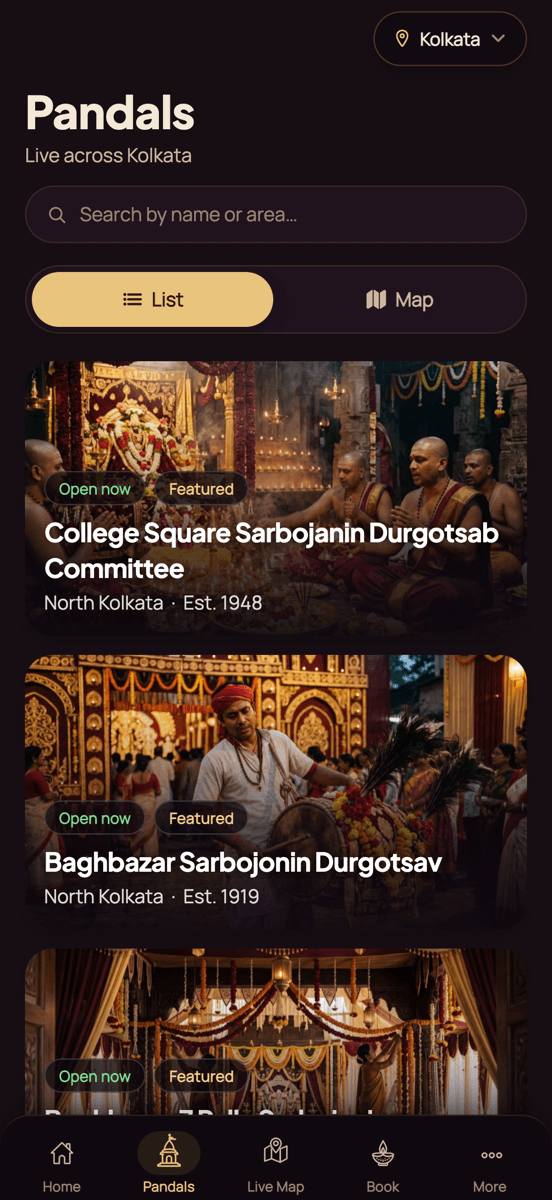
- Pandal
- A temporary, often elaborately themed pavilion built to house the goddess's idol and host worship and crowds.
- Pratima / Thakur
- The sculpted image of Durga with her children that is worshipped; thakur is the affectionate Bengali term for the deity idol.
- Dhak
- The large cylindrical drum, slung from the shoulder and played with sticks, whose beat is the defining sound of Durga Puja.
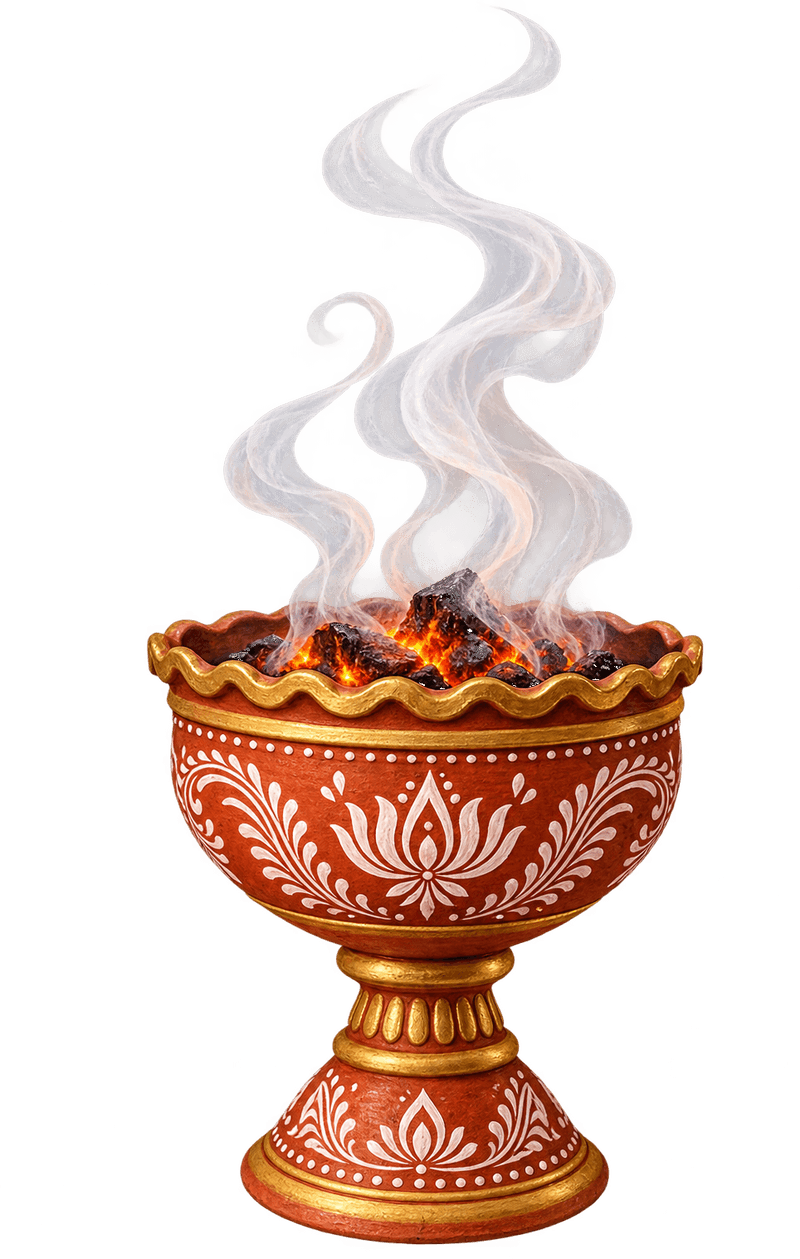
- Dhunuchi
- An earthen incense-burner filled with smouldering coconut husk and dhuno resin, swirled in the devotional dhunuchi naach dance.
- Bhog
- Sanctified food offered to the goddess and then shared among devotees: classically khichuri, labra, chutney, and payesh.
- Anjali
- The offering of flowers made with cupped hands while reciting mantras, chiefly on Ashtami.
- Sindoor
- Vermilion powder, applied to married women and to the goddess, and the medium of the joyous Sindoor Khela on Dashami.
- Barowari
- A community puja funded by public subscription, from baro yaari (twelve friends), originating at Guptipara in 1790.
- Sarbojanin
- For all: the fully public community puja open to everyone, first organised at Baghbazar in 1910.
- Visarjan / Bisorjon
- The ceremonial immersion of the idol in a river on Dashami, returning the clay to the water.
- Adda
- The cherished Bengali tradition of long, relaxed, free-flowing conversation, at its most vibrant during the puja.
- Para
- A neighbourhood or locality; the para pujo is the beloved community puja of one's own quarter.
- Kumartuli
- The historic potters' quarter of north Kolkata whose artisans sculpt the Ganga-clay idols exported across the world.
- Alpona
- Decorative floor and courtyard art, drawn with rice-flour paste, adorning puja spaces with auspicious motifs.
- Chalchitra
- The painted semicircular backdrop or arch behind the traditional idol, depicting deities and scenes framing the goddess.