ॐ · Resources
The rituals, day by day
The arc of the festival, day by day, from the painting of the eyes to the last farewell at the ghats.

Mahalaya
Seven days before DashamiMahalaya marks the end of Pitri and the beginning of Devi Paksha, the goddess's fortnight. Bengal wakes before dawn to Mahishasuramardini, the sacred radio broadcast first aired on 22 September 1931, its Chandipath verses recited in the unforgettable voice of Birendra Krishna Bhadra. It is also the day of , when people offer water to their ancestors at the riverbank. In the workshops of Kumartuli, artists perform Chokkhu , painting the eyes onto the clay idol to bring the goddess to life.
Kalparambho
Morning of ShashthiKalparambho is the solemn vow that formally begins the worship. The priest takes a sankalpa, a ritual resolve, before a ghot (a consecrated water pot) to conduct the faithfully through all its days. Quiet and preparatory rather than spectacular, it is the ceremonial threshold across which the festival proper begins.
Bodhon
Evening of ShashthiBodhon is the awakening and welcoming of the goddess, the ritual that recalls Rama's Akalbodhon. It invites Durga to descend from her Himalayan home to her parents' house, for the is imagined as the married daughter's annual homecoming with her children. From Bodhon onward the pandals fill with the sound of the dhak, and the festive spirit is fully unleashed.
Shashthi (Bel Boron)
Sixth dayOn the sixth day the goddess is formally received. A central rite is Bel Boron, in which her presence is called into a chosen branch of the bel (wood-apple) tree. The face of the idol, kept veiled until now, is unveiled to devotees on Shashthi evening. The pandals come alive with their first full evening crowds, incense, conch shells, and the steady beat of the dhak.

Saptami (Nabapatrika)
Seventh dayThe seventh day opens with Nabapatrika, the nine leaves, nine sacred plants bound together as a symbol of the goddess's nine forms. Bathed at the river at dawn, the bundle is draped in a red-bordered white saree and set beside Ganesha, which is why she is affectionately called Kola Bou, the banana bride. Its roots are agrarian, an old harvest worship, and with it the main of Durga begins in earnest.
Ashtami (Pushpanjali, Kumari Puja)
Eighth dayThe eighth day is the most crowded and devout. Devotees gather in fresh clothes for , offering handfuls of flowers while reciting mantras. In some pandals, most famously at Belur Math, Kumari is performed, worshipping a young girl as the living embodiment of the goddess. Great communal meals of khichuri , labra, and payesh are cooked and shared. Ashtami's massed flowers, chanting, and shared food are the emotional peak of many pujas.
Sandhi Puja
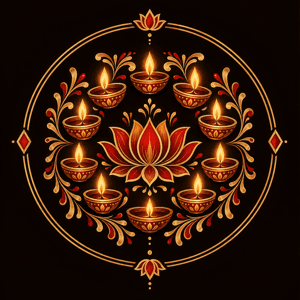
The juncture of Ashtami and NavamiSandhi falls at the exact juncture of Ashtami and Navami, the 48 sacred minutes made of the last 24 of Ashtami and the first 24 of Navami. It commemorates the moment when, from Durga's brow, the fearsome Chamunda blazed forth to strike down the demons Chanda and Munda. To honour it, 108 earthen lamps are lit and 108 lotus flowers offered. The most auspicious window of the entire festival, it is observed with breathless intensity.

Navami (Maha Aarti, Dhunuchi Naach)
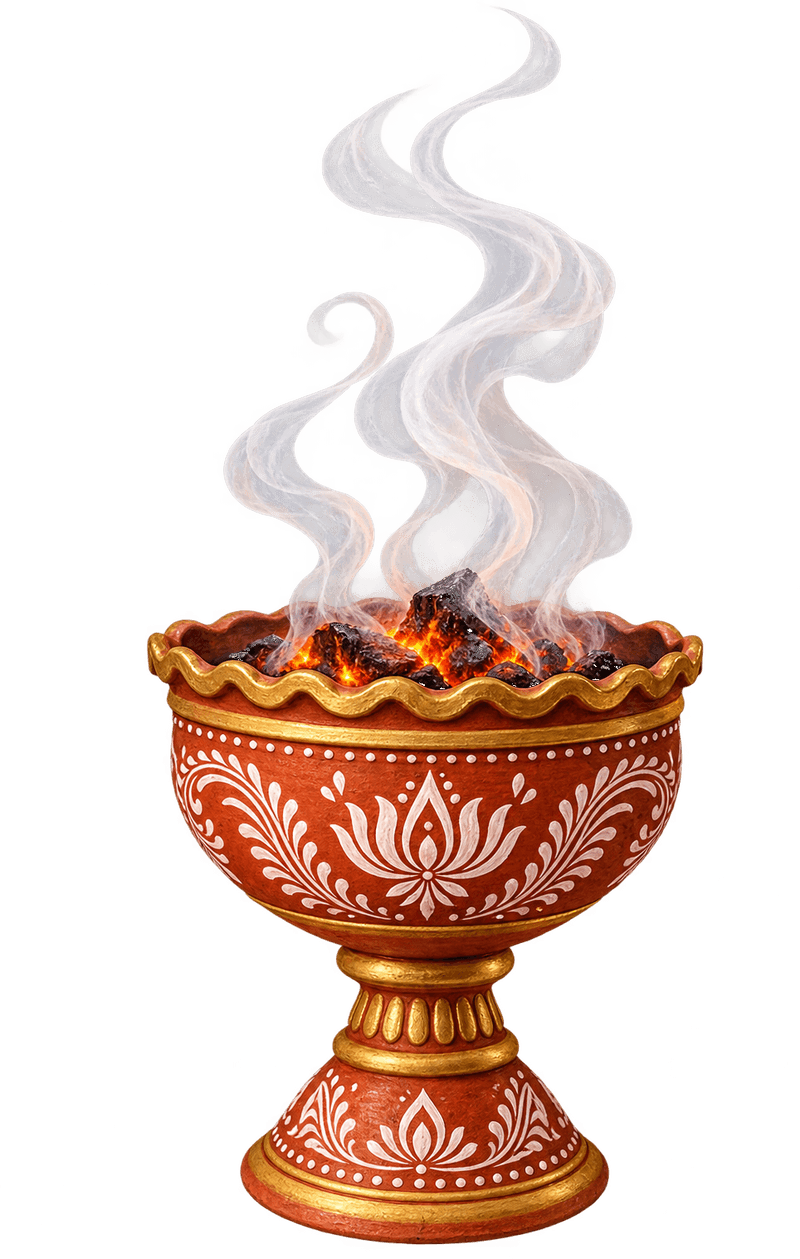
Ninth dayThe ninth day brings the great fire offering, the Homa, and the Maha , the grandest lamp-worship of the . Navami evening belongs to the Dhunuchi Naach, the ecstatic dance performed while balancing an earthen brazier (dhunuchi) smoking with incense and burning coconut husk, swirled to the frenzy of the dhak. It is devotion turned to celebration, the community savouring its last full night with the goddess before farewell.

Vijaya Dashami (Sindoor Khela, Bisorjon)
Tenth dayThe tenth day is both triumphant and tender. Married women perform Devi Boron, welcoming the goddess with sweets, betel leaf, and vermilion, bidding her goodbye as one sends off a daughter to her marital home. This flows into Sindoor Khela, when women smear one another with sindoor in a joyful, red-hued embrace. Then comes Bisorjon, the immersion, when the idol is returned to the water from which its clay was drawn. Amid tears and drumbeats, everyone cries Aasche bochor abar hobe: it will happen again next year.