
Alpona
Rice-paste floor art that welcomes the goddess.
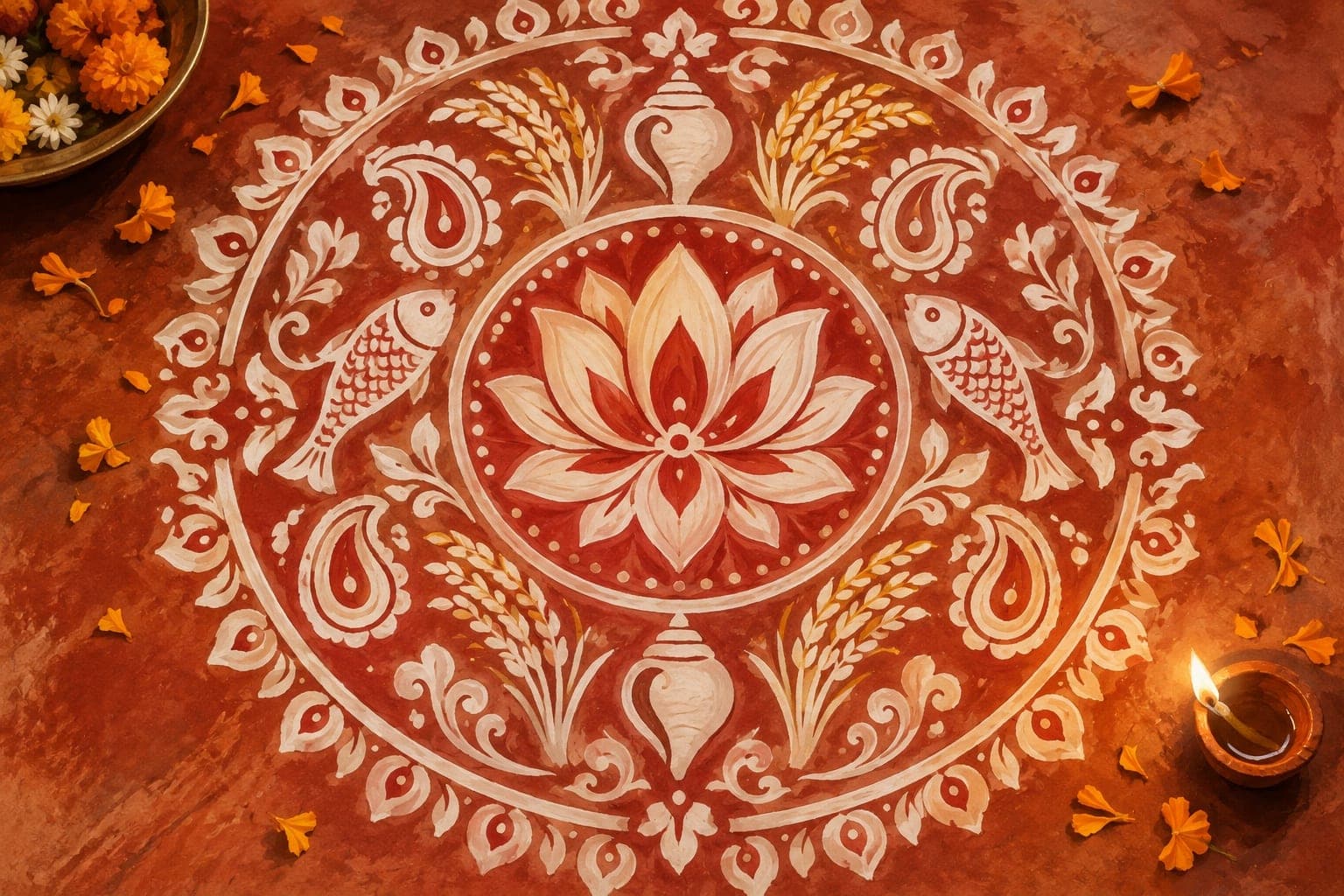
Alpona is drawn on the floor and threshold with a paste of ground rice and water, traced by hand in flowing white lines. Lotuses, conches, fish and footprints are the old motifs.
It is a rite of welcome, laid down before the puja so the goddess arrives onto a decorated ground. The art is meant to be temporary, made fresh each year.
The paste is pithuli, rice ground or soaked and thinned with water, lifted onto the floor with a twist of cloth or the fingertips. The lines are drawn freehand, and while the classic alpona is plain white, some hands touch in vermilion or a little colour.
It is a welcome laid at the threshold and across the courtyard. Small footprints are traced leading into the home, the goddess's steps inviting prosperity inside, and each motif carries its own good omen, the lotus and the conch, the fish, the sheaf of paddy and the winding creeper.
Alpona has long been a household craft, kept by the women of the family and passed from mother to daughter, drawn afresh at Lakshmi Puja, at weddings and at brotos as much as at Durga Puja. In Bengal it was also revived as a recognised folk art, the Santiniketan tradition raising the everyday floor drawing to a studied form.