
Thakur dekha
Walking pandal to pandal through the festival nights, taking darshan.
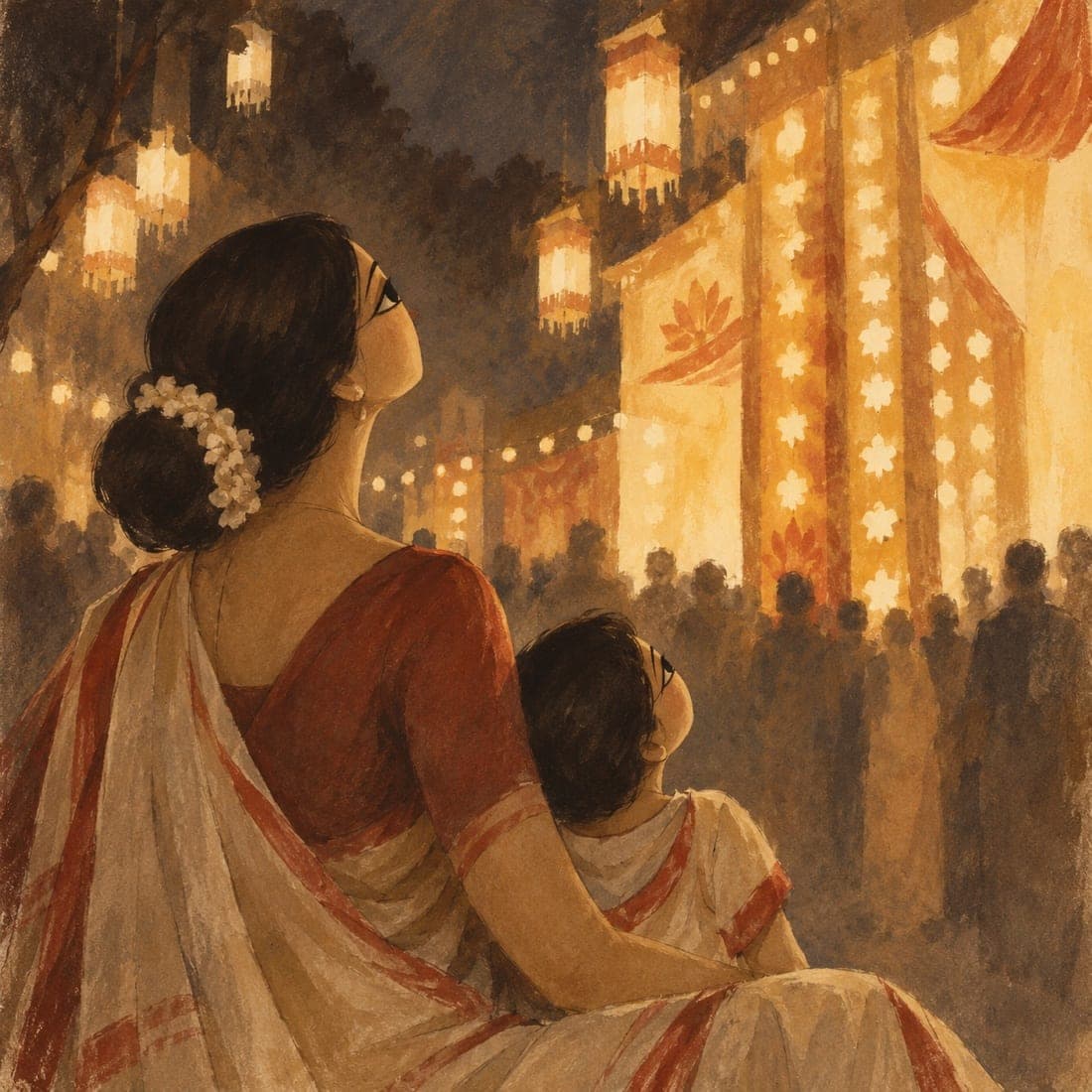
Thakur dekha means going to see the goddess. Through the nights of the puja, families and friends set out on foot to move from one pandal to the next, taking darshan of Durga in form after form.
Each neighbourhood builds its own pandal, so a single night can carry a walker past dozens of idols, themes and lights. Many plan a route across the city and keep walking until dawn.
It is as much an outing as a pilgrimage. People put on new clothes bought for the pujas, move in groups of family and friends, and eat their way through the night, egg rolls and phuchka, biryani and kathi rolls, ice cream at two in the morning, from the stalls that spring up along every route.
The city falls into rough circuits. North Kolkata holds the old-para pujas and the bonedi houses, their idols in the classic ekchala; the south and the suburbs hold many of the big theme pujas that draw the longest queues. On the biggest nights the Metro runs late to carry the crowds, and whole lanes are barricaded into one-way rivers of people.
For all its crowds, thakur dekha is the city's largest open-air exhibition, and it is free. Anyone can stand before a two-storey idol or an award-winning pavilion without a ticket. From Shashthi to the small hours of Dashami the whole city becomes a gallery that never closes, and the walking itself is the festival.