The art of dhak: the heartbeat of Durga Puja
Who the dhakis are, where they come from, how the drum is made and played, and why a puja without dhak is a puja that has not started.
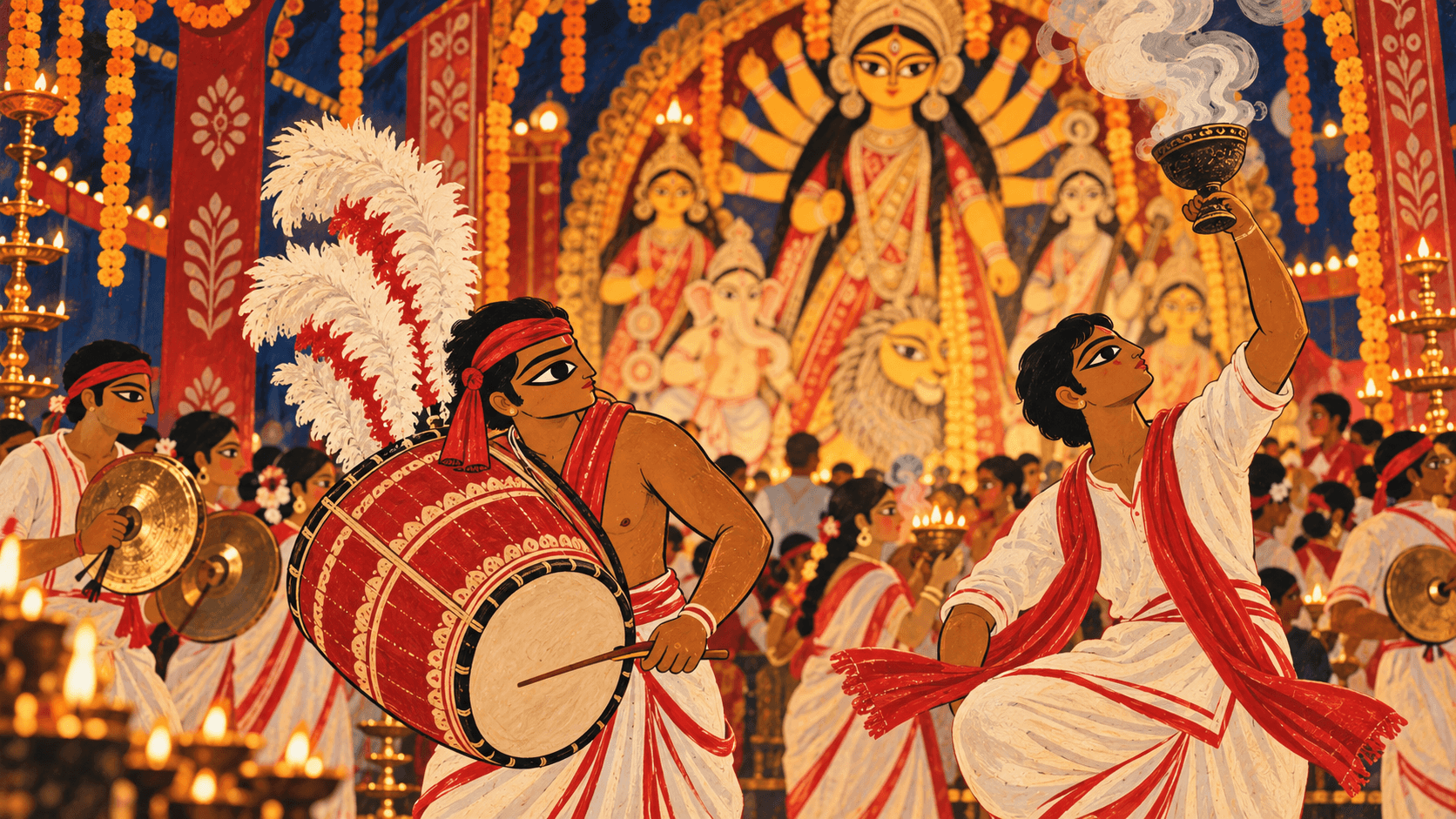
You hear the pandal before you see it. A deep boom that arrives through the soles of the feet, a rattle on top of it, a bell cutting through. That is the dhak, and for five days it is the pulse of the city.
The drum
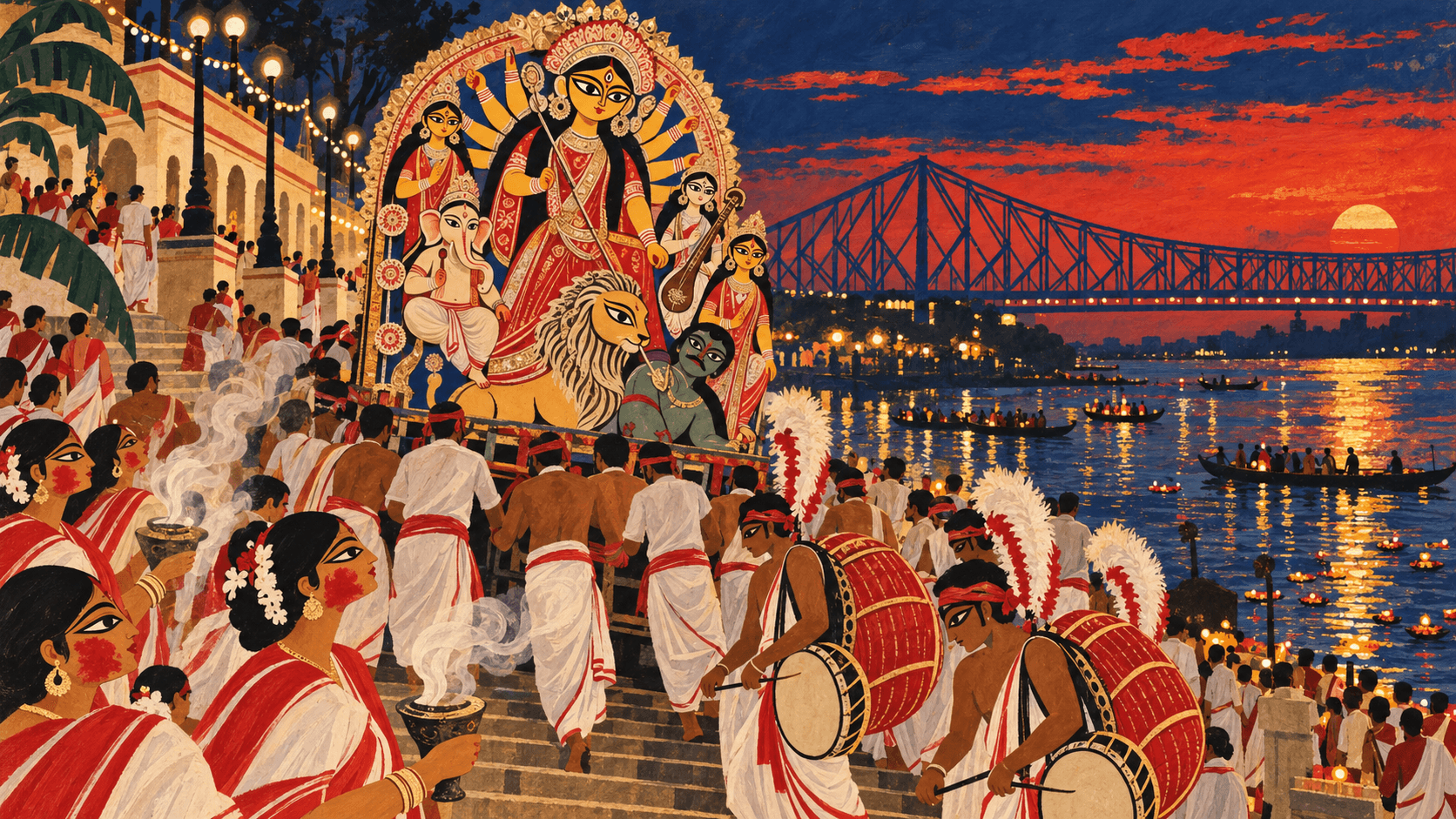
A dhak is a large barrel drum, a metre or so long, hollowed from mango or jackfruit wood and skinned with hide, thicker on the bass head, thinner on the treble. It hangs from the neck on a strap and is played with two cane sticks, one thick, one thin. The plumes of white feathers on top are not decoration for the eye but for the ear: they mark the player in a crowd so the dancers can follow him. The kansar, a flat bronze gong struck with a stick, rides on the beat and gives the tempo its edge.
The dhakis
Dhakis are not from Kolkata. They come every year from the districts, Murshidabad, Nadia, Birbhum, Bardhaman, Purulia, in family groups of a father, sons and cousins, arriving at Sealdah and Howrah stations a week before Shashthi with the drums on their backs. Committees hire them at the stations in an open market that has run for generations: a good troupe of four, with kansar and a dancer, is booked for the five days, fed, housed near the pandal, and paid at the end. The big theme pujas contract their dhakis months ahead. The para pujas still go to the station.
A dhaki's year is five days long. The rest is farming, and waiting for Mahalaya.
What the drum says
Dhak is learnt by mouth before it is learnt by hand. Every stroke has a syllable, a bol, and a phrase is spoken before it is played: dha, ta, kur, dhin. The rhythms have names and jobs. The arati bol is slow and heavy, for the lamp being circled before the Goddess. The naach bol is the quick rolling pattern the dhunuchi dancers move to. On Sandhi Puja, the 48 minutes at the junction of Ashtami and Nabami, the dhak does not stop at all. And on Dashami the bisarjan bol is the same pattern as the welcome, played slower, because it is the same journey in reverse.
The dance that answers it
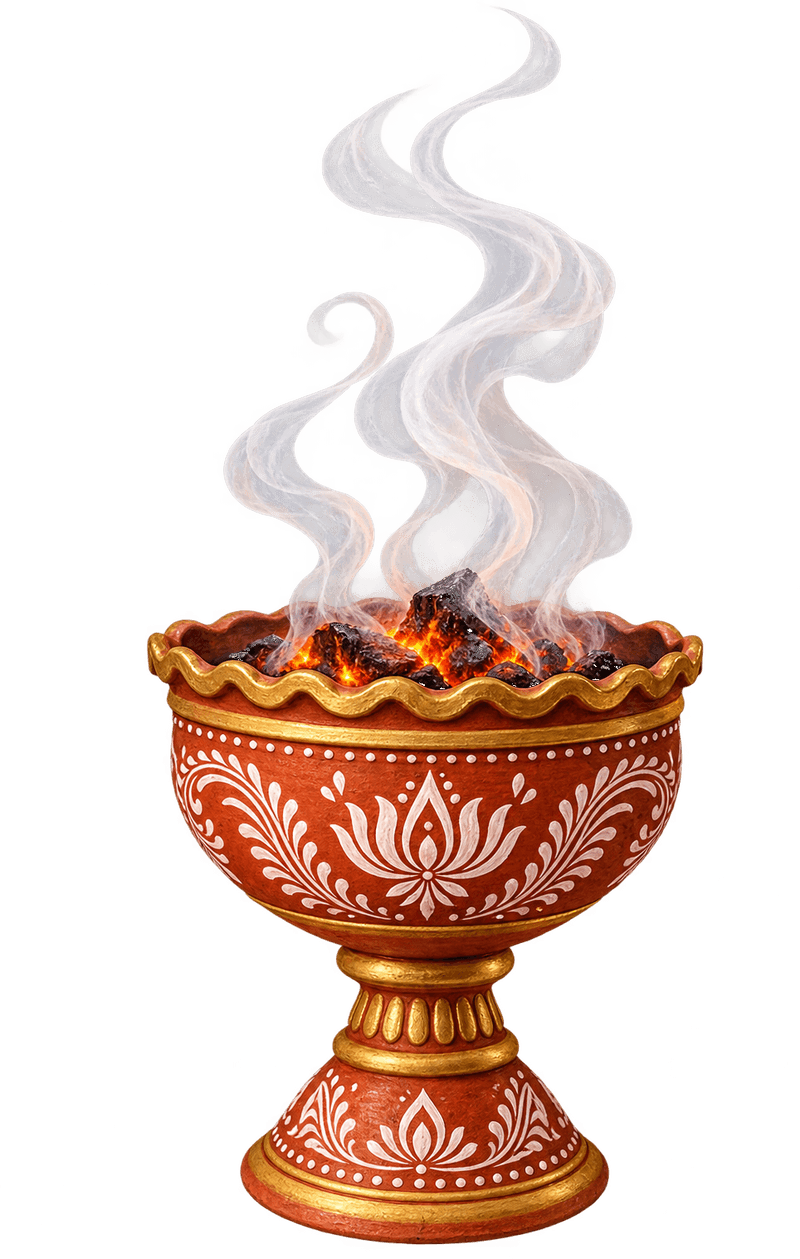
Dhunuchi naach is the dhak's reply. A clay censer packed with coconut husk and dhuno, the resin of the sal tree, is lit until it pours white smoke, then held in one hand, then two, then in the teeth by the brave, and danced before the Goddess to the naach bol. The smoke is the offering; the dance is the joy of making it. Every para has its champion, and on Nabami night the competitions run till the dhakis' arms give out.