Bhog: the kitchen behind the pandal
The khichuri, labra and payesh cooked in a giant cauldron, blessed at the Goddess's feet and shared with the whole para. Who cooks it, what goes in, and how to eat it well.
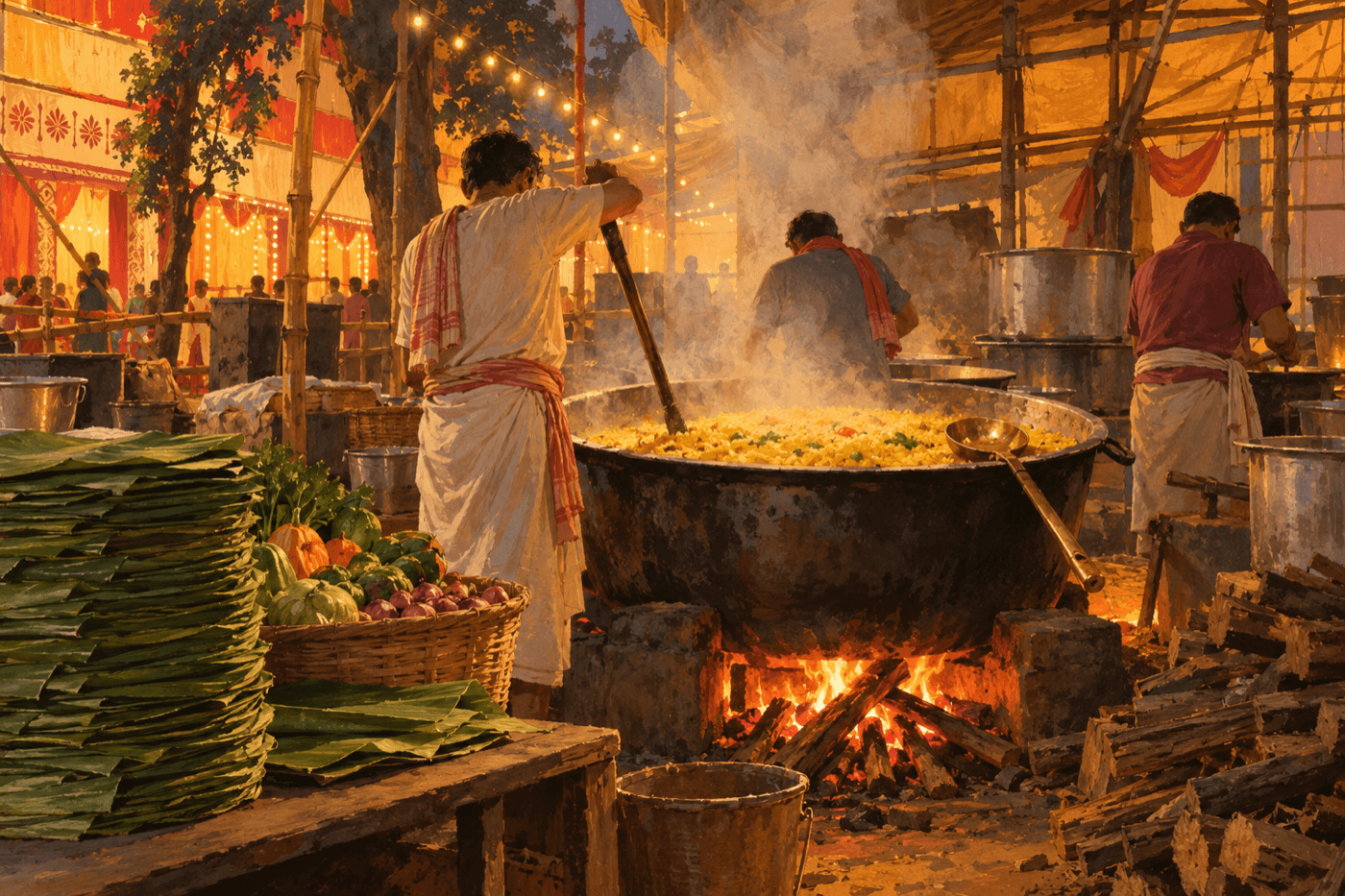
By nine on Ashtami morning the anjali is over, the flowers are down, and the smell changes. It stops being incense and starts being ghee and cumin and ginger, drifting from a tarpaulin behind the pandal where a cauldron the size of a bathtub has been going since dawn. That is the bhog, and for many people it is the truest part of the day.
What is on the leaf
The classic Durga Puja bhog is niramish, without onion or garlic, because it is cooked for the Goddess first and the para second. The heart of it is bhoger khichuri, gobindobhog rice and moong dal roasted together till they smell of biscuit, then boiled soft with ginger, turmeric, whole spices and a fistful of vegetables. Around it go labra, a dry mixed-vegetable stir with panch phoron; a beguni or a fried papad; a tomato-date-raisin chatni that is sweet and sour and always served near the end; and payesh or mishti to finish. It is eaten off a banana leaf or a sal-leaf plate, with the hand, sitting on the floor in rows.
The kitchen crew
A para pandal cooks for hundreds; a big one for thousands. The cooking is done by the committee's own, uncles who take three days off work, aunts who have run this kitchen for twenty years, teenagers on the vegetable-cutting shift the night before. Some pujas hire a bhog thakur, a specialist cook who knows how to hold khichuri for five hundred without it catching, but the labour around him is always volunteer. Rice, dal and oil come partly from the puja budget and partly as donation, a sack of rice in a sponsor's name, and nobody who turns up hungry is turned away.
First the Goddess eats, then the guest, then the one who cooked. That order is the whole festival in one plate.
From offering to prasad
Before a single leaf is served, a portion of everything is carried to the Goddess and offered by the priest with the bhog mantra. Until that moment it is food; after it, it is prasad, the same dish transformed by having been given first. This is why bhog is never tasted for salt while it cooks, and why the first plate does not leave the pandal. On Ashtami and Nabami the queues are longest, because the Ashtami bhog after the pushpanjali is the one nobody wants to miss.